


 Home
HomeWho is on INTERPOL’s most wanted list?

INTERPOL doesn’t maintain a single ranked “most wanted list” with named individuals. The public “View Red Notices” page only shows what requesting countries have chosen to make visible, and nothing there is sorted by severity or notoriety.
Who ends up on it is defined by the type of offence, not identity. INTERPOL only accepts these requests for serious crimes, typically tied to criminal proceedings already underway in a member country — not political, military, religious, or private disputes, which are barred under Article 3 of its Constitution. In practice, this covers people wanted for financial crime, drug trafficking, violent crime, and increasingly cybercrime, from any of the organisation’s 196 member countries.
A case stays visible until it’s resolved — through arrest and extradition, withdrawal by the requesting country, or a successful challenge before the CCF. To check whether a specific individual is subject to one, the only reliable route is searching the database directly or requesting information through the CCF via a lawyer.
Does INTERPOL Actually Have a Global ‘Wanted List’?
No. The idea of a single, public “wanted list” is a myth. The closest thing is the “View Red Notices” section on INTERPOL’s website. It lists people wanted by member countries—but only those countries that asked for the notice to be public.
This public list is just the tip of the iceberg, showing only a fraction of the thousands of notices in circulation. Most are restricted, visible only to law enforcement. What does this mean for you? Don’t assume you’re in the clear just because your name isn’t on the public website. A confidential notice could still exist.
INTERPOL itself is clear on this point: even a Red Notice is not an international arrest warrant. INTERPOL can’t issue warrants or force a member country to arrest anyone. That power always belongs to the national authorities in the country where a person is found.
So, What Is an INTERPOL Red Notice and How Does It Work?
A Red Notice is an alert, plain and simple. The INTERPOL General Secretariat sends it out after a member country or an international tribunal asks them to. It tells police forces everywhere that a person is wanted for prosecution or to serve a sentence, based on a valid arrest warrant from the requesting country. It’s a core tool for international police cooperation.
The whole process starts locally. For example, if a U.S. prosecutor has an arrest warrant for a fugitive they think is overseas, the U.S. Department of Justice (DOJ) Criminal Resource Manual explains they can ask their National Central Bureau to request an INTERPOL Red Notice.
Once that notice goes out and the individual is found in another country, two things happen:
- The country that located the person tells the country that requested the notice. What can go wrong here? Sometimes, communication is slow or gets lost in bureaucracy, leaving the individual in legal limbo while they wait for the requesting state to act.
- The requesting country can then ask for a provisional arrest to begin extradition. This happens through diplomatic channels, following any existing bilateral or multilateral treaties, such as a specific extradition agreement.
What Are the Different Types of INTERPOL Notices?
Red Notices are the most famous, but INTERPOL uses a whole colour-coded system. Each notice facilitates different kinds of international police cooperation. Understanding these is vital because each one carries very different legal weight.
| Notice Type | Purpose | Action Requested of Police |
|---|---|---|
| Red Notice | To seek the location and arrest of a person wanted for prosecution or to serve a sentence. | Locate and provisionally arrest pending extradition. |
| Blue Notice | To collect additional information about a person’s identity, location, or activities. | Locate, identify, and obtain information on a person of interest in a criminal investigation. |
| Green Notice | To provide warnings and intelligence about persons who have committed criminal offences. | Warn police that a person may pose a threat to public safety. |
| Yellow Notice | To help locate missing persons, especially minors, or help identify people unable to identify themselves. | Locate a missing person. |
| Black Notice | To seek information on unidentified bodies. | Help identify a deceased person. |
| Purple Notice | To seek or provide information on the modus operandi, objects, devices, and concealment methods used by criminals. | Share intelligence on criminal methods. |
Here’s the key difference to remember: a Red Notice is a direct request for an arrest, while a Blue Notice is just a request for information. It doesn’t carry the same immediate risk of detention.
In total, INTERPOL currently recognises eight notice types, plus Diffusions — an informal alert mechanism explained below, which increasingly plays the same practical role as a notice.
What Is a Diffusion, and How Is It Different from a Notice?
A Diffusion is a less formal alert, sent directly by one country’s National Central Bureau to the National Central Bureaus of other member countries, without going through INTERPOL’s General Secretariat first. Diffusions follow the same colour-coding system as notices — so a “red diffusion” carries a request to locate and arrest, just like a Red Notice.
The key difference is oversight. A Red Notice is checked by INTERPOL’s General Secretariat before it’s circulated. A red diffusion is not — it can be sent out immediately and only reviewed afterward. This makes diffusions faster to issue, but also more vulnerable to misuse, since the built-in compliance check that Red Notices undergo happens after the fact rather than before. If you’re trying to determine your exposure, checking for a diffusion is just as important as checking for a notice.
What is the difference between a Red Notice and a Blue Notice?
The main difference is the action requested. A Red Notice is a call to arrest. It means a country’s judicial authorities have issued a warrant and want to extradite the person to stand trial or serve a sentence. It’s a pre-extradition tool.
A Blue Notice, on the other hand, is an investigative tool. It’s used to “trace, identify or locate” someone of interest in a criminal investigation. It doesn’t request an arrest. Law enforcement often uses it to gather intelligence on a suspect’s location or activities before deciding whether to file formal charges.
What Legal Rules Stop INTERPOL from Being Abused?
INTERPOL’s operations are governed by a strict legal framework, its Constitution and the Rules on the Processing of Data (RPD). To stop its systems from being misused for political or other illegitimate reasons, a special task force at the General Secretariat checks every notice request for compliance.
The single most important safeguard is Article 3 of the INTERPOL Constitution. It flat-out forbids the organization from undertaking “any intervention or activities of a political, military, religious, or racial character.” This neutrality clause is the bedrock of INTERPOL’s integrity. It’s also the most common legal argument for challenging an abusive notice.
If a notice is found to be mostly political—say, targeting a political opponent or a human rights activist disguised as an ordinary criminal—it violates Article 3 and must be deleted. There are other grounds for refusal, too. For instance, a notice can be rejected if it’s about a private matter (like a simple debt) instead of a serious crime.
How Can Someone Challenge or Remove an INTERPOL Red Notice?
Anyone who believes they are the target of an unjust notice can formally challenge it. This process is managed by the Commission for the Control of INTERPOL’s Files (CCF), an independent body ensuring INTERPOL’s data handling follows its own rules. It’s the main path for anyone asking how to challenge an INTERPOL Red Notice.
To start, you submit a formal deletion request to the CCF. This application isn’t a simple form; it must contain detailed legal arguments and evidence showing how the notice violates INTERPOL’s rules. Since March 2026, these applications must be submitted through the CCF’s secure online portal rather than by post or email. The most common arguments include:
- Violation of Article 3: The case is political, military, religious, or racial in nature.
- Not a Serious Crime: The allegations are about a private dispute (like a breach of contract), a family law issue, or an administrative matter, not a serious crime as required by INTERPOL.
- Human Rights Violations: Proving that extradition to the requesting country would put the person at significant risk of an unfair trial or torture, which violates fundamental human rights.
- Procedural Errors: The notice is based on a flawed or invalid domestic warrant.
You can also submit a Request for Access to see if INTERPOL has any data on you. The CCF reviews these requests and, after talking with the relevant member countries, decides whether to grant access, delete the data, or keep it. The entire process is confidential and done mostly through written arguments.
⚠️ Time is critical — every day matters
Get a free case assessment
Our team specialises in cases with an international element. We review applicable treaties, assess risks, and prepare an action plan.
🔒 Confidential · Response within 24h · No obligation
Frequently Asked Questions
Who are the most wanted on INTERPOL?
INTERPOL doesn’t rank or publicise a “most wanted” list in the way national police forces sometimes do. The public “View Red Notices” section of its website shows only the notices that the requesting country has agreed to make visible — and even then, it’s not curated by severity or notoriety, just by what’s been published and hasn’t been removed or restricted.
In practice, the profile of the people on that list is broad: individuals wanted for financial crime, drug trafficking, violent crime, and increasingly cybercrime, from a wide range of countries. There’s no single “top of the list” — a person’s notice stays visible until it’s fulfilled (arrest/extradition), withdrawn by the requesting country, or removed through a CCF challenge.
If you’re trying to check whether a specific person is subject to a notice, the only reliable approach is to search the public INTERPOL database directly or consult a lawyer who can request information through the CCF — general commentary about “who’s on the list” isn’t a substitute for a case-specific check.
What happens when you are on the INTERPOL list?
Being the subject of an INTERPOL notice, even a secret one, has severe consequences. You face a high risk of arrest at any international border or even during a routine police check. But the problems don’t stop there. Secondary effects can cripple your life: frozen bank accounts, cancelled visas, and denied residency applications, making it nearly impossible to travel or conduct business.
Is an INTERPOL Red Notice an arrest warrant?
No. It is not. This is a critical legal distinction. An INTERPOL Red Notice is only a request to law enforcement in member countries to locate and provisionally arrest someone. The actual power to arrest always comes from the national authorities in the country where the individual is found, acting based on their own laws and the original warrant from the requesting country.
How do you get on the INTERPOL wanted list?
First, forget the idea of a single "wanted list." It doesn’t exist. Instead, individual countries can request that INTERPOL issue a notice against a person. This isn’t an INTERPOL arrest warrant; it’s a global alert based on a national one. The process kicks off only after a court in a member country issues a valid domestic arrest warrant for a serious crime. With that warrant in hand, the country’s National Central Bureau can ask the INTERPOL General Secretariat in Lyon, France, to circulate a Red Notice, effectively asking other nations to help find the person for potential extradition.



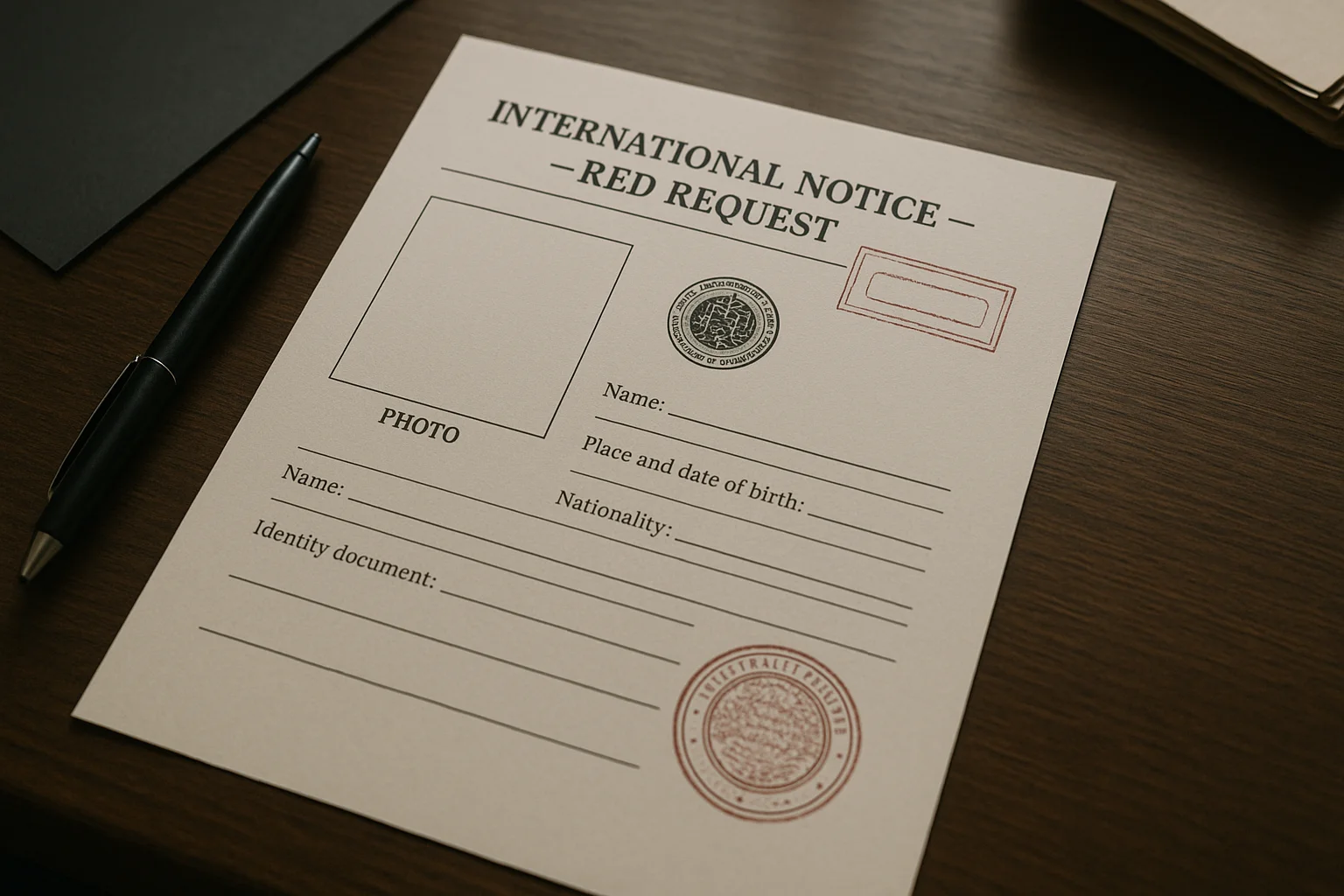

If a Red Notice concerns you rather than someone on a public list, the next step is a formal request to INTERPOL’s CCF. Our Red Notice removal lawyers in Dubai review the grounds and file it.