

 Home
HomeCan You Get Arrested at the Airport for a Warrant?

Yes — you can be arrested at the airport if you have an outstanding warrant. That said, whether it actually happens depends on the type of warrant, your flight route, and which law enforcement agencies are present. This guide breaks down the real risks so you can make an informed decision before you get to the gate.
Will I Get Stopped at the Airport If I Have a Warrant?
The short answer: possibly, and on international flights, almost certainly.
Under the TSA’s Secure Flight program, airlines are required to submit passenger manifests to federal authorities up to 72 hours before departure. That data is cross-referenced against law enforcement databases. This means your name may be flagged before you even arrive at the airport — not after you pass through security. For domestic travel, the risk depends on whether local police are called and whether they choose to act. For international travel, the Customs and Border Protection (CBP) agency runs every passport through federal criminal databases in real time — there is very little margin for error.
TSA vs. CBP: Who Actually Has the Authority to Arrest You?
Many travelers confuse these two agencies. Their roles are distinct, and understanding the difference is important.
Transportation Security Administration (TSA)
TSA officers are not law enforcement agents in the traditional sense — they are federal security screeners. Their primary mandate is to identify threats to flight safety: weapons, explosives, and prohibited items. TSA does verify your identity by scanning government-issued ID, but it does not run active warrant checks as a standard procedure.
However, if a TSA officer cannot verify your identity, or if your boarding pass triggers a flag in the Secure Flight system, local airport police will be called — and those officers do have full access to criminal databases.
Customs and Border Protection (CBP)
Customs and Border Protection CBP is a federal law enforcement agency with broad statutory authority. Every traveler on an international flight — arriving or departing — is subject to a CBP screening. Officers have direct, real-time access to the National Crime Information Center (NCIC) database, the Treasury Enforcement Communications System (TECS), and international watchlists maintained by Interpol. If you have a felony warrant, a federal warrant, or even some misdemeanor warrants, CBP will flag your passport the moment it is scanned. Arrest typically follows within minutes.
Domestic vs. International Flights: Risk Comparison
The table below outlines how the screening process and arrest risk differ depending on your route.
| Parameter | Domestic Flights | International Flights |
| ID Verification | TSA scans ID via document authentication systems | CBP scans passport against federal & international databases |
| Database Used | No automatic NCIC check unless local police are called | Direct real-time access to NCIC, TECS, Interpol databases |
| Arrest Risk | Low to moderate — depends on warrant type and luck | High — felony warrants and many misdemeanors trigger immediate detention |
| Who Makes the Arrest | Local airport police (if called) | CBP officers with full law enforcement authority |
| Extradition Risk | Possible if issuing state agrees to transport | Immediate, especially for federal warrants |
Which Types of Warrants Trigger an Airport Arrest?
Not all warrants carry the same level of urgency. Law enforcement agencies make practical decisions about whether it is worth dispatching officers to an airport — particularly for domestic flights where the offending state may not be willing to pay extradition costs.
Felony Warrants
These carry the highest arrest risk — approaching near-certainty on international flights. Felony charges include violent crimes, drug trafficking, fraud, and other serious offenses. Federal agencies actively pursue individuals with felony warrants and will detain them regardless of which state issued the warrant.
Misdemeanor Warrants
These present a more variable risk on domestic flights. Local police may decline to respond if the warrant was issued in another state and extradition costs exceed the perceived benefit. That said, if a police officer runs your name for any reason — a routine ID check, a secondary screening — the warrant will appear and you can be detained on the spot.
Bench Warrants
Issued when a defendant fails to appear in court, bench warrants remain in the NCIC database until the underlying case is resolved. The arrest risk depends heavily on the severity of the original charge. A bench warrant for a DUI failure-to-appear is treated very differently from one issued in a felony drug case.
Interpol Red Notices
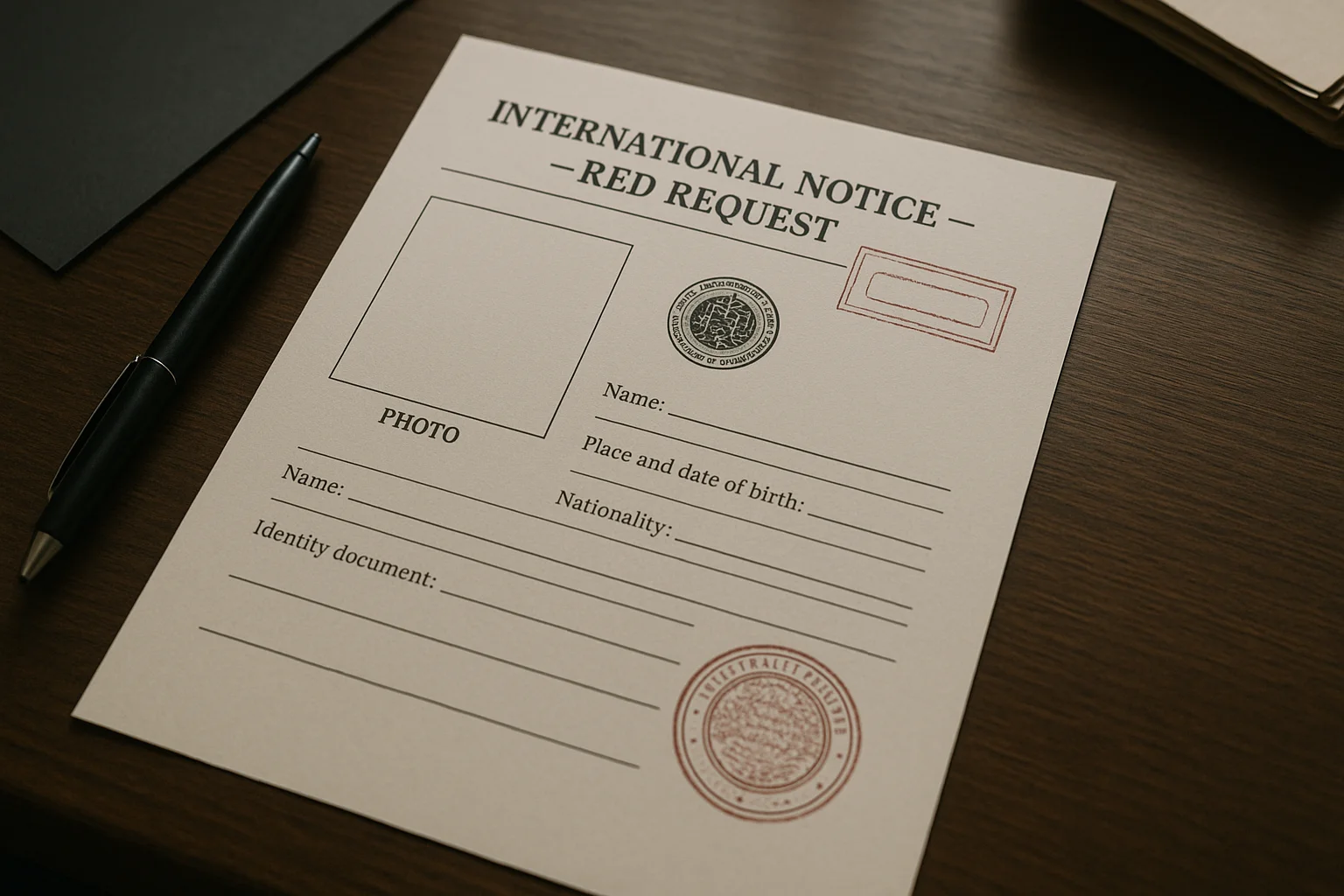
These are international arrest requests circulated through 196 member countries. If your name appears on an Interpol Red Notice, attempting to travel internationally is extremely high risk. CBP and border agencies globally have access to Interpol databases.
What Actually Happens When You Are Arrested at an Airport?
The phrase “airport jail” circulates online, but it is somewhat misleading. Airports do not typically have standalone detention facilities. What they do have is a secure holding area managed by the local airport police department or, in the case of international terminals, by CBP officers.
The process generally unfolds as follows:
- You are approached by a law enforcement officer and asked to step aside.
- Your identity is verified and your name is run through the NCIC database.
- If a warrant is confirmed, you are placed in handcuffs and moved to a holding area within the airport.
- Your personal belongings — including your carry-on luggage — are secured and inventoried.
- If you had checked luggage, it is typically pulled from the aircraft.
- Within hours, you are transported to the local county jail, where formal booking occurs.
- The jurisdiction that issued the warrant is notified.
You will not be held indefinitely at the airport. Processing usually takes one to four hours before transfer to a county facility.
What Happens If the Warrant Is from Another State?
If you are arrested in New York for a warrant issued in Texas, you do not automatically return to Texas. The issuing state must formally request extradition — and it must agree to cover the transportation costs.
For minor misdemeanors, many states decline to extradite because the cost is not justified. In that scenario, you may be released after a brief hold. For felonies, extradition is nearly automatic. The process can take anywhere from a few days to several weeks, during which you may remain in local custody unless bail is granted.
Note: Even if the issuing state declines extradition, the original warrant remains active. You will face the same risk every time your name is run through a police database.
How to Check If You Have a Warrant Before Traveling
The safest approach is to resolve any uncertainty before you reach the airport. Here are three practical steps:
- Check county court websites. Most county clerk offices maintain searchable public records. Search for your name in the county where you have previously lived or received traffic citations.
- Use a background check service. Commercial services such as BeenVerified or Instant Checkmate aggregate public records across jurisdictions. These are not infallible, but they can flag known warrants.
- Consult a criminal defense attorney. This is the most reliable option. An attorney can conduct a discreet search through professional channels without triggering police notification — something that a direct inquiry to law enforcement might do.
If you discover an active warrant, do not book your flight. Contact an attorney immediately to explore options for voluntarily resolving the warrant, which typically results in significantly better outcomes than an airport arrest.
What to Do If You Are Detained or Arrested at the Airport
If you are stopped by airport law enforcement, your conduct in the first few minutes matters significantly.
- Do not resist. Comply calmly with instructions from officers.
- Do not volunteer information. You are not required to answer questions about where you are going, why, or about the underlying warrant.
- Invoke your rights clearly and explicitly.
- Request an attorney immediately. Do not waive this right.
Under Miranda v. Arizona, 384 U.S. 436 (1966), law enforcement must inform you of your right to remain silent and your right to an attorney before conducting a custodial interrogation. Anything you say before invoking these rights can be used against you in court.
Consult an Attorney Before
You Fly If you have reason to believe you may have an outstanding warrant — even a minor one — do not leave it to chance. An experienced criminal defense attorney can verify your status discreetly, help you resolve the warrant voluntarily, and protect your rights throughout the process. The cost of a consultation is far lower than the cost of an airport arrest.
FAQ
Does TSA check for warrants?
TSA does not run warrant checks as a standard part of its screening process. Its primary function is identifying threats to aviation security. However, TSA does verify identity, and if local airport police become involved for any reason, they will run a full background check through the NCIC database.
Can I fly domestically with a misdemeanor warrant?
It is possible to pass through a domestic airport without being stopped for a misdemeanor warrant, but it is not safe to assume you will. If your name is checked by local police for any incidental reason — an unrelated incident, a secondary screening — the warrant will surface and you will be detained.
Will I be arrested at customs with a bench warrant?
Most likely, yes. CBP officers scan all international travel documents against federal law enforcement databases, which include bench warrants. The severity of the underlying offense will influence what happens next, but detention is common even for lesser charges.
What happens to my luggage if I am arrested at the airport?
Carry-on luggage is typically secured by law enforcement and inventoried with your personal belongings. Checked bags are usually pulled from the aircraft. Depending on the circumstances, your luggage may be held by the airline, airport authority, or local police.
Can airlines see my criminal record when I buy a ticket?
No. Airlines do not have access to criminal records or warrant databases. However, they are legally required to submit passenger manifests to the TSA’s Secure Flight program, which does share that information with law enforcement agencies.
Can you be arrested at the airport for unpaid child support?
Yes. In many states, chronic failure to pay child support can result in a contempt of court finding and an associated arrest warrant. These warrants appear in the NCIC database. There are documented cases of individuals being detained at airports due to child support enforcement warrants.
Does TSA use facial recognition to identify people with warrants?
TSA has been piloting facial recognition technology at select airports primarily to verify that a traveler’s face matches their ID document — not to run identity checks against criminal databases. That said, the technology is evolving and its scope may expand.
Can police arrest me past the security checkpoint?
Yes. Law enforcement officers — including local airport police and federal agents — have jurisdiction throughout an airport, including in secured gate areas and on jet bridges. There is no legal sanctuary beyond the TSA checkpoint.
Can you be denied boarding at check-in without being arrested?
Yes — this is different from an airport arrest. Airlines can refuse boarding based on a Secure Flight or document-validation flag before you ever reach a law enforcement checkpoint. No handcuffs, no holding area — just a refusal to issue a boarding pass, which can be just as disruptive without technically being a detention.